
The Short Version
The Tooth Fairy is a fun and important part of childhood, bringing whimsy and magic to what could be a confusing or even scary experience of losing baby teeth. According to an annual poll, the Tooth Fairy visits more than 8 in 10 homes in the United States, and nearly a quarter of children say a visit from the Tooth Fairy is one of their favorite surprises!
The Tooth Fairy is a fun and important part of childhood, bringing whimsy and magic to what could be a confusing or even scary experience of losing baby teeth.
According to an annual poll, the Tooth Fairy visits more than 8 in 10 homes in the United States, and nearly a quarter of children say a visit from the Tooth Fairy is one of their favorite surprises!
But have you ever wondered what your dentist thinks of this tradition?
Here at Hancock and Johnston Dentistry, we fully support the Tooth Fairy’s mission to bring a small gift to children to encourage them to take care of their teeth and look forward to future dentist visits!
How the Tooth Fairy Works
While the origins of the Tooth Fairy are vague, the general consensus in the United States is that when children lose one of their baby teeth, they should place it underneath their pillow. The Tooth Fairy will then visit while they sleep, hovering quietly to collect the tooth, never waking the child. The fairy then leaves a treasure or small payment in return for taking the tooth.
Nobody is super certain what the Tooth Fairy looks like! According to a survey from 1984, most people believe the Tooth Fairy is female.
The Tooth Fairy’s reward varies. Most children receive money, though the amount is different each time and often correlates with inflation and S&P 500 stock index. The average payout per tooth rose from $1.30 in 1998 to $5.01 in 2025.
Sometimes the fairy leaves a small toy or game (47 percent), a letter from the Tooth Fairy (35 percent) or even a toothbrush (31 percent).
No matter what the fairy brings, 1 in 4 children go to bed early, excited for the Tooth Fairy’s arrival!
TOOTH FAIRY TIPS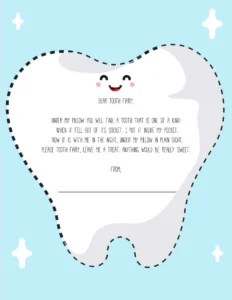
- Use a “Tooth Fairy Dish” if your child is a light sleeper to leave the tooth by the child’s bed at night for the tooth fairy.
- Sometimes the Tooth Fairy leaves a sprinkling of fairy dust or glitter on the windowsill or leading up to the door to show where they flew in.
- Leave a note for the Tooth Fairy, and she might write back!
- The Tooth Fairy likes to give more money for the cleanest and shiniest teeth because she uses them to build a big castle in the sky. It pays to brush every morning and night!
- Instead of money, some children might find a fun toothbrush with their favorite cartoon character to help remind them to keep the rest of their teeth healthy.
Why the Tooth Fairy is Important to Children
Not only is the Tooth Fairy a fun rite of passage for children, we also believe the tradition is an important part of childhood development with several benefits.
Encouraging Good Oral Hygiene
The anticipation of a visit from the Tooth Fairy can motivate children to brush and floss regularly. Parents can use this opportunity to teach children about the importance of maintaining good oral hygiene to keep their teeth healthy for the Tooth Fairy. According to Delta Dental’s Original Tooth Fairy Poll, 1 in 3 parents affirm that the fairy’s visits help instill good oral health habits.
Easing Fear of Tooth Loss
Losing a tooth can be a scary experience for young children. Parents believe that the Tooth Fairy helps lessen the anxiety associated with tooth loss by turning it into a celebratory milestone. This can lead to better feelings toward dental appointments and a more positive attitude towards dental care in general.
DID YOU KNOW?
Most kids have a full set of 20 baby teeth by the time they’re 3 years old and they start to lose these teeth by the time they’re 5 or 6, making room for about 32 adult teeth. Most of these grown-up teeth come in by the time kids are 12-14, but the last four — the wisdom teeth — usually pop up between the ages of 17 and 21.
Promoting Conversations on Oral Health
The Tooth Fairy is a good conversation starter about oral health, providing a natural introduction into discussing why teeth fall out and how new ones will grow in their place. Parents can also use the fairy visit as a way to remind children to brush twice a day and floss.
Fun fact: The fairy has been bringing more oral health related gifts in recent years, including toothbrushes (40%), toothpaste (33%) and floss (27%)!
The excitement of finding a treat under the pillow creates lasting, positive memories associated with dental care. The team at Hancock and Johnston Dentistry always looks forward to hearing these cheerful stories from our young patients.
Answer Your Child’s Tooth Fairy Questions
I put my tooth under my pillow. Why didn’t the Tooth Fairy come last night?
What does the fairy do with all of those teeth?
How does the Tooth Fairy know I lost a tooth?
What does the Tooth Fairy look like?
Why do my baby teeth fall out?
Why do I have to brush my teeth?
What will the tooth fairy give me for my tooth?
Where should I put my baby tooth?
Oops! I lost my baby tooth. Will the Tooth Fairy still give me a present?
Sources: Delta Dental, American Dental Association
Schedule Your Child’s Checkup Today
Like most dentists, our team appreciates the Tooth Fairy for making oral health exciting and positive for children. We do not think of the fairy as simply a magical part of childhood. To us, she is an important ally in encouraging good dental habits for the future.
Let your child know that we look forward to hearing about their latest Tooth Fairy visit when they come in for a checkup at Hancock and Johnston Dentistry!